
World Wide Work
Books, Films, Music You May Have Missed

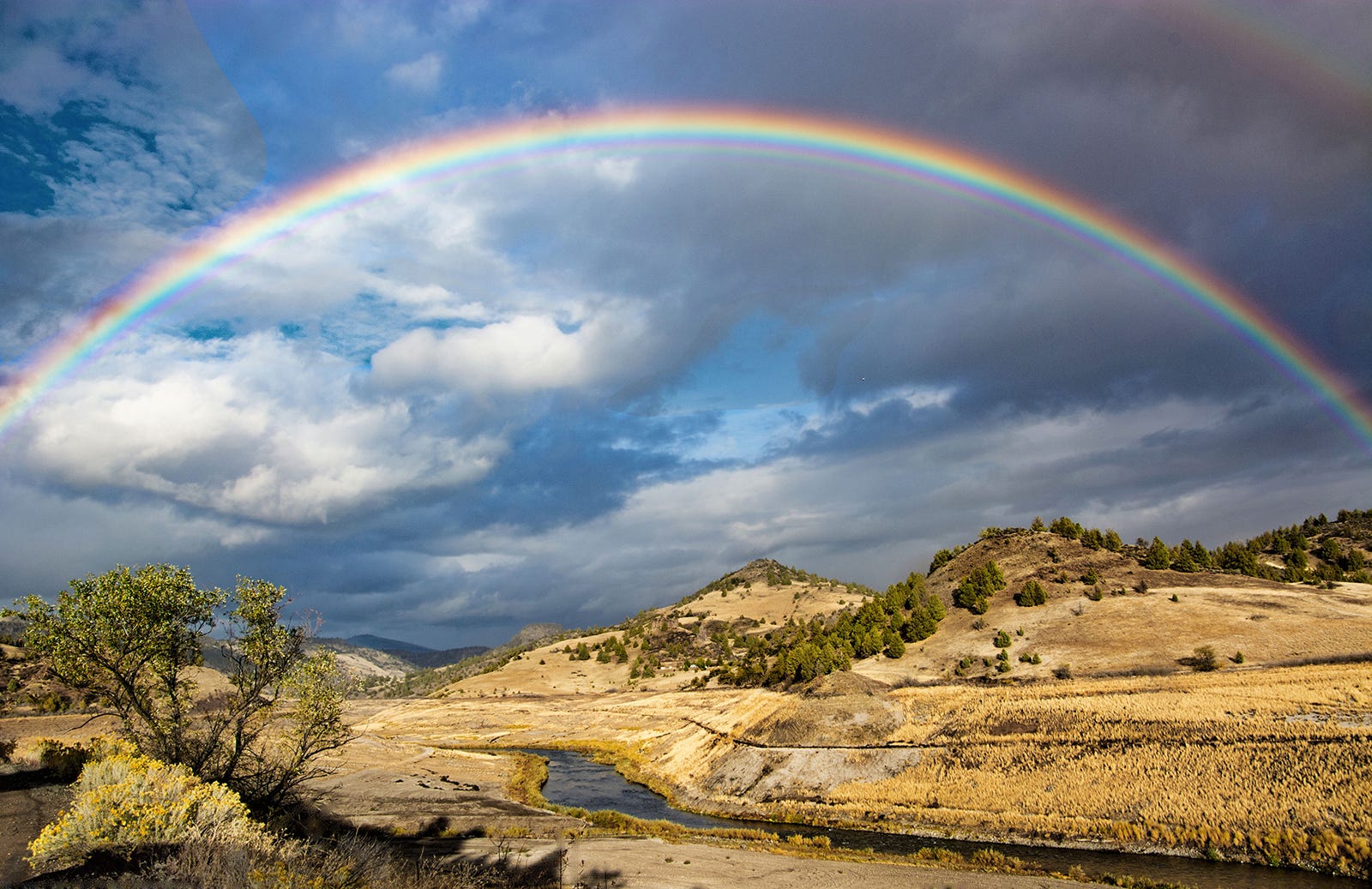
I had the good fortune to see this rainbow over the Klamath River in California shortly after four dams were removed, allowing salmon to spawn in waters that had been blocked for up to 100 years. Crews from the Yurok Nation have planted millions of seeds on the river banks shown in this photo so native flora will restore this area.
Major streams from the Cascade-Siskiyou National Monument such as Jenny Creek and Scotch Creek feed the undammed Klamath River, underscoring the importance of protecting the monument.
But as this column of mine in newspapers throughout the West reports, the Trump administration recently nominated Steve Pearce to head the Bureau of Land Management (BLM), the agency that administers many of our public lands. As a member of Congress, Pearce coauthored a letter to Trump specifically calling for abolition (“complete rescission”) of the Cascade-Siskiyou National Monument and other monuments that he would now oversee.
The photography book, Monumental Beauty,shows the beauty and biodiversity of the Cascade-Siskiyou National Monument, with 100% of the proceeds going to the monument’s defense.
The story of how and why the dams on the Klamath were taken down is told in a highly informative new book, The Water Remembers (Little, Brown)., by Amy Bowers Cordalis, former general counsel of the Yurok Nation.
After the dams were removed, 28 indigenous young people took a month to kayak the length of the river, from its headwaters and past the sites of the former dams to the ocean. An inspiring 30-minute public television documentary called First Descent follows their journey.
Meanwhile, states could be taking bolder, outside-the-box action to counter attacks by the Trump administration. This article from the blog More Than Just Parks gives examples.
BOOKS
A Guardian and a Thief by Megha Majumdar (Knopf). In this all-too-real novel that takes place in India, the global climate crisis and the gap between billionaires and everyone else grow to the point that households are pitted against each other for basic survival.
Amity by Nathan Harris (Little, Brown). In this unusual historical fiction, it’s 1866 and the Civil War is over, but a Black brother and sister who were enslaved by a white family in New Orleans are still not free. Their struggle for emancipation ends up in Mexico where they encounter African Americans and Seminoles who fled the United States and established their own community.
The Daughters by Ben Rogers (University of Nevada). This touching story is about people who long for close family relationships but can’t quite make them happen.
The Nights Are Quiet in Tehran by Shida Bazyar (Scribe). An Iranian novel follows one left-leaning family over 40 years from opposing the repressive regime of the Shah to exile in Germany to a return to their homeland.
The Eyes of Gaza by Plestia Alaqad (Little, Brown). A young Gazan journalist shares excerpts from her diary covering the period from October 7, 2023 to May, 2025. The result is an eloquent account of what she saw and felt, from scenes of unspeakable destruction to poignant anecdotes about friends, family, and neighbors.
Gaza Catastrophe by Gilbert Achcar (University of California). A Lebanese writer explains that oppression of Palestinians began long before October 7, 2023, and argues that neither the Israeli government nor Hamas represent the interests and needs of the Palestinian people.
On Antisemitism by Mark Mazower (Penguin). In measured tones, a Jewish historian examines how the word “antisemitism” that once had a clear meaning has become a weapon used against anyone who questions the policies of the Israeli government. Those policies, he finds, have actually increased antisemitism around the world and have made Jews less safe, not more. He quotes a former Israeli attorney general who said that the Israeli government treats Palestinians the way Jews around the world have long been treated: “For Jews in Israel there is only one way to combat antisemitism, That is not to imitate (it).”
Don’t Stop Teaching About Gaza (Rethinking Schools). A publication from a network of educators gives practical examples of how to help students, families, union members, and others learn about the situation in Gaza and what can be done about it.
Solidarity Betrayed by Ana Avendaño (Pluto). A former Assistant to the President of the AFL-CIO uses specific examples to show that unions have not done enough to combat sexual harassment and makes concrete recommendations for improvement. While the book focuses on unions, it will be useful for anyone interested in learning more about both the problem of sexual harassment and possible solutions.
We’re Coming for You and Your Rotten System by Jonathan Rosenblum (OR Books). The author gives his take on the years he worked for Seattle City Councilor Kshama Sawant who supported a local $15 minimum wage, renters’ rights laws, and other progressive legislation.
FILMS
Lingua Franca. In this powerful feature film, a trans woman from the Philippines who works in New York is terrified that she might be picked up by ICE. Marriage to an American citizen might provide a path to citizenship (though a difficult one) but her relationship with a male slaughterhouse worker is complicated.
Las Amazonas de Yaxunah. A surprising ESPN documentary follows women of Mayan ancestry in a small community in the Yucatan jungle who unexpectedly form a softball team, bringing change to themselves, their families, and their community.
The Wall Street Boy. What if a teenaged genius in a small village in Kenya developed an algorithm that allowed him to beat world markets in stocks and currencies?
Where The Tracks End. Men in Mexico who repair train tracks must constantly move with their families to follow the work, making schooling and friendships difficult to maintain. This realistic but fictionalized feature film focuses on one such makeshift community and their school teacher.
Welcome. Inspired by true stories, this French film features a 17-year-old Kurdish refugee in France who wants to try to reach England by swimming the English Channel even though he doesn’t know how to swim.
I Am a Fugitive From a Chain Gang. This award-winning film made in 1932 is based on a true story of a white returning war veteran who was sentenced to 10 years hard labor on a Georgia chain gang after unwittingly being drawn into a petty robbery. He escaped, built a respectable life in the North, and became an outspoken critic of the use of chain gangs.
Willow. The amazing lives of mountain lions, foxes, and other animals are revealed in this hour-long documentary based on video footage shot over many years using motion-sensitive cameras on a large piece of private land in Montana.
Union. Filmmakers got access to document from the inside the campaign to form a union at an Amazon warehouse in Staten Island, NY. They show both the workers’ courage and determination and the obstacles unionization efforts at Amazon continue to face.
MUSIC
Safe, Sensible and Sane. This enjoyable collaborative album by Alison Brown and Steve Martin features virtuoso, melodic banjo playing and quirky lyrics, with guest appearances by Della Mae, Jackson Browne, the Indigo Girls, Tim O’Brien, Sarah Jarosz, Aoife O’Donovan, Jason Mraz, and more.
Jesse Welles. Welles is a prolific songwriter of political songs like “War Isn’t Murder,” “Walmart,” “United Health,” and “Join ICE,” as well as more personal or philosophical tracks.